
Loading...

Unless you've been hiding under a rock for the past decade, you will have witnessed the meteoric rise of Malbec, which is now arguably the coolest red varietal wine in the UK. The vineyards of Pays d'Oc IGP are playing an increasingly exciting role in the fortunes of this grape, which has charted a course from its native Cahors, around 200 km north-west of Pays d'Oc, via Argentina's Mendoza region, back to the south of France – where it creates an impressive range of excellent wines in the varied Pays d'Oc area. Dominic Rippon selects a case of his favourite IGP Pays d'Oc Malbecs, from a sample call of unusually consistent quality and refreshing diversity.
I'm old enough to remember when Malbec was a somewhat obscure variety: a seasoning grape for Bordeaux blends (it is a sibling of the ubiquitous Merlot) and the backbone of the so-called "black wines" of Cahors. These latter wines tended to be austere brews with grinding tannins that required many years bottle age to soften, by which time only the very best offered real pleasure.
Meanwhile in the 1990s, the seeds of Malbec's success were being sown 12,000 kilometres south-west of Cahors, in Argentina's Mendoza region. As in France, the variety had hitherto been regarded as capricious and disease-prone; it was over-cropped in the vineyard and treated roughly in the winery.
A handful of winemakers in Mendoza began to notice that, when the variety was planted in higher, cooler sites and irrigation was restricted, Malbec was able to produce beautifully ripe, powerful, fruity reds: exactly what the international market was thirsty for. As Argentina's signature red grape, Malbec has since leapfrogged the renown of those from other New World countries (Chile's Carmenère, South Africa's Pinotage...), taking its place alongside New Zealand Sauvignon Blanc as an essential fixture on any wine list.
Since then, France has rushed to claim its share of the success of a variety that is, after all, its own. In its home vineyards of Cahors, grapes began to be picked later and extractions became softer, giving riper, more approachable wines.
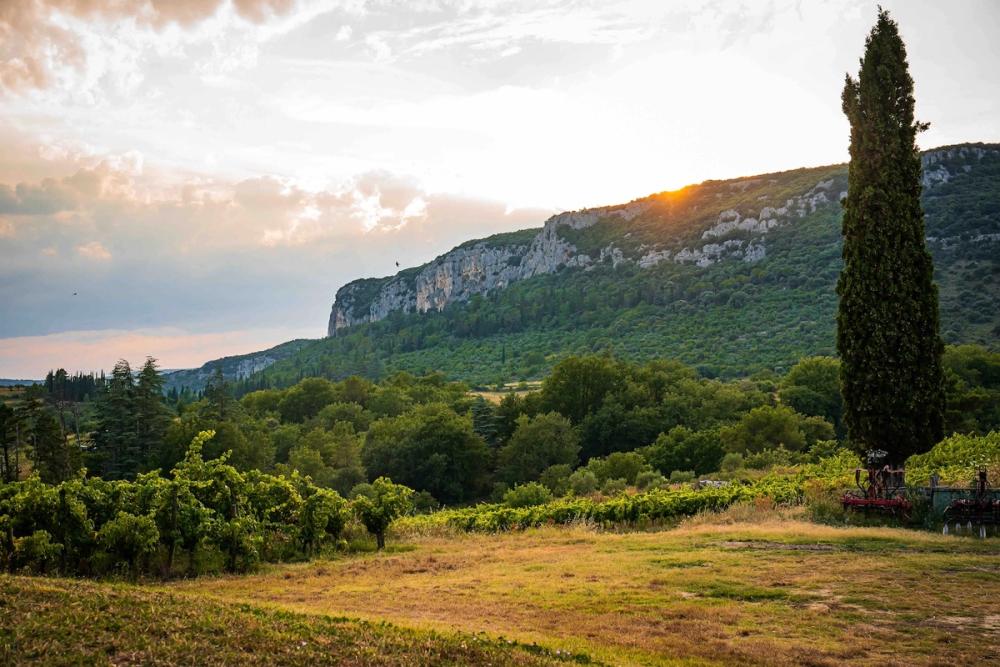
Malbec is perfectly at home in the vineyards of Pays d'Oc IGP, where it has in fact long been planted, especially in the foothills of the Pyrenees. Just like in Mendoza, plentiful sunshine, a patchwork of cool microclimates and modern winemaking techniques have helped the variety to shine ever brighter. Some producers even talk about the influence of altitude, hitherto an Argentine USP – although nowhere in Pays d'Oc gets anywhere near the heights of the Andean vineyards! Crucially, in Pays d'Oc, Malbec (which is know as Côt in Cahors) proudly wears its name on bottle labels.
Soil type will directly influence how the Malbec vine grows and affect some characteristics of the resulting wine. Malbec vines grown on alluvial soils tend to produce wines with dark fruits and mineral-scented-earth notes; those grown on mountain and colluvial soils have smaller berries and higher concentration producing wines with softer tannins and blue-floral aromas; Malbec grown on limestone soils tends to be more fine and floral with higher acidity.
A key feature of Pays d'Oc IGP is, of course, the enormous range of different soils and climats, in a region that stretches all the way from the Pyrenees in the south, eastwards to the banks of the Rhône. Styles consequently vary enormously, from dark, brooding Malbecs to those with almost New World levels of exuberance, although always with a strong southern French accent.
Pays d'Oc IGP produces around 30,000 hectolitres of Malbec each year, which puts it in the middle of the field among the 23 permitted red varieties – for comparison, more than a million hectolitres of Merlot were squeezed in 2023! I expect to see a steady increase in production in the next few years, as Malbec's star continues to rise in France's Pays d'Oc.
Seeking distribution in the UK
"Harmonie" Malbec 2023, Domaine de l'Herbe Sainte, 14%
In the eastern part of the Minervois zone, this deeply-coloured purplish Malbec comes from vineyards strewn with large pebbles, reminiscent of those found in the southern Rhône – and there's definitely something Rhône-ish about the wine's spiced blackberry and raspberry aromas, which need a little time to emerge fully. Creamy bramble fruit appears on the palate too, with a juicy middle and a muscular, tannic finish, rounded out by a six-month stint in barrel. Drink with rich game dishes. RRP £14.95.


